![]() | ![]() | ![]() | ![]() | ![]() | ![]() | ![]() |
The company now known as World Wrestling Entertainment began as NWA member Capitol Wrestling Corporation in 1953. After separating from the National Wrestling Alliance (NWA) (then the governing body of wrestling) for good in 1963, Vincent J. McMahon (Vince McMahon Sr.), and his business partner, Joseph "Toots" Mondt rechristened their organisation the World Wide Wrestling Federation, (despite the ambitious name, they still only promoted events throughout the northeast territory) with "Nature Boy" Buddy Rogers, the recently-dethroned NWA Champion, who had just a short time prior lost the title to Lou Thesz in controversial one-fall fashion (typically, all NWA title matches at that point were best-of-three contests), freeing him to separate from the NWA, as the WWWF's first Champion, having "won" a phantom tournament for the title in April 1963, holding the title for only a month before dropping it to Bruno Sammartino, who would go on to hold it for nearly 8 years in his first of two title reigns. The NWA Board of Directors was unhappy with Rogers being booked almost exclusively in the northeast region that McMahon controlled, and voted the title off Rogers, using shootfighter Lou Thesz as the NWA's insurance that Rogers would drop the title. Despite their separation from the NWA, Vince McMahon, Sr. still sat on the NWA Board of Directors, and as such, there were several title unification matches, which usually ended in some form of double disqualification, insuring the titles stayed separate.
The name was trimmed to the more widely known World Wrestling Federation in 1979, a name the company is still commonly referred to as despite the several years old name change. The corporate name of the company was Capital Sports Promotions throughout the 60s up until the 80s, when Vincent K. McMahon (Vince McMahon Jr.) took over the company, merging it with his own company, Titan Sports, Inc. before changing to World Wrestling Federation Entertainment, Inc., and most recently becoming World Wrestling Entertainment, Inc. Headquartered in Stamford, Connecticut, they have satellite offices in Los Angeles; New York City; London, England; Toronto, Canada; and China.
In 1982, after Vincent J. McMahon sold his share of the company to his son, Vincent K. McMahon, the younger McMahon proceeded to buy out his father's partners shares of the company in order to proceed with his plan to become the dominant force in pro wrestling, or as he liked to refer to it as, "sports-entertainment", a term he used to differentiate his "action-adventure drama series" from "sleazy, fake pro wrestling" in order to both gain mainstream respect for his vision and to also be able to eventually branch off into other forms of entertainment, such as movies.
McMahon accomplished his goal by paying established regional stars huge guarantees (any kind of guaranteed contract, much less a contract at all, was generally unheard of in pro wrestling at the time) to walk out without notice on whatever promotion they were currently working for to join his WWF, and then proceeding to distribute videos of his new acquisitions to local TV stations, pitting the local hero against his larger than life "WWF SuperStars", and in the process giving his WWF national penetration through videotape. McMahon's colourful "SuperStars" (alternatively called "sports-entertainers", "performers", or just "entertainers", but never "wrestlers") were tailor made for TV, and as wrestling shows are relatively cheap to air on TV (especially when McMahon videotaped his shows for national and International distribution), it didn't take long for TV stations nationwide to snap up WWF programming to air, often choosing McMahon's slicker, glossier programs over the local wrestling promotion, effectively putting them out of business as without TV to drive house (untelevised arena) show business, audiences rapidly dwindled to the point where promoters could no longer afford to run shows. Additionally, McMahon made sure to run his WWF in direct competition with the local shows. With home video sales driving TV business and live show revenue, McMahon was able to put on a first class product that made rival shows pale in comparison and set the standard for "big time" wrestling worldwide.
Rival promoters knew McMahon was spending money as fast as he earned it to continue luring in talent and to keep his shows on the air, and felt that soon enough, he would overspend and be out of business. As a result, few promoters were overly concerned until it was too late. Between television licenses, the cost of keeping open his Coliseum Video distribution company which distributed and marketed his WWF releases (prior to McMahon, wrestling's regional business model was dependent on TV clearances locally to drive arena business, where the money was. Videotaping events for future distribution wasn't needed; fans got their wrestling fix going to shows in the pre-VCR days.), the cost of running big shows nationwide, and the talent raid from rival promotions did cause a huge drain on McMahon's finances. This drain caused him to keep the biggest stars off the road, in an effort to help keep costs under control and keep them from overexposure. Still, despite the rosy picture painted by the WWF, McMahon's finances were approaching critical. However, he had one more trick up his sleeve.
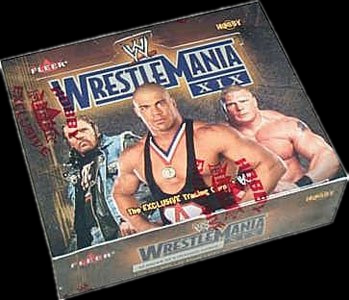
McMahon entered into a partnership with New Japan Pro Wrestling to market several of their top draws overseas, such as Andre The Giant and Hulk Hogan (already a draw overseas prior to McMahon signing them). This partnership enabled McMahon to borrow enough money to put on his own supercard, similar to the NWA's Starrcade, which had run annually since 1983. McMahon wanted to do his own show, called "WrestleMania" (named by longtime ring announcer & 2009 Hall of Fame member Howard Finkel), except that WrestleMania would follow the WWF formula of being seen on a national scale, using the fledgling closed-circuit technology (the percursor to pay-per-view) to broadcast it in arenas throughout the country and make it appealing to people who were not wrestling fans. He would achieve this goal by strategic alliances with MTV and NBC. He would have his wrestlers guest star on popular NBC shows (The A-Team being the one most remembered, but also Saturday Night Live), and created The Rock n'Wrestling Connection with loudmouth manager Cap'n Lou Albano having appeared in a music video for Cyndi Lauper and her making appearances on WWF TV and cultivating a feud with Albano that would also involve McMahon's Womens Champion, Wendi Richter, the culmination of which would be settled at WrestleMania. The A-Team's Mr. T, the breakout star of the series, befriended Hulk Hogan and would appear in his corner at WrestleMania, further cementing McMahon's vision of the WWF being a pop culture phenomenon that "everyone was watching", a key concept in getting non-wrestling fans to tune in to WrestleMania.
With a significant portion of his finances tied up in the creation and promotion of WrestleMania, McMahon knew failure was not an option if he wanted to keep his company from bankruptcy. It was a risky proposition, trying to convince fans to pay a significantly higher amount of money to see his show on pay TV, and in keeping his top stars off the road in the weeks and months prior to WrestleMania to keep interest in them high, it left some fans disgruntled at not being able to see the most popular WWF SuperStars in person.
Despite sluggish initial buys for WrestleMania causing some initial concern within the company, a last minute surge provided relief for the company as a whole, and a resounding success for WrestleMania as a concept.
Rival promoters, realising WrestleMania would tell the story on the WWF were naturally severely disappointed over its success, as it would mean the death of pro wrestling as they knew it, and the emergence of McMahon's version of pro wrestling, "sports-entertainment".
During the next several years, with Hulk Hogan at the top of the card, the WWF enjoyed a continual stream of success for nearly 10 years. Although Hogan took off for a year in 1990, the WWF continued its stream of success by Hogan's embracing of the Ultimate Warrior as his successor upon Warrior's defeat of Hogan for the WWF Championship at WrestleMania VI. When the Ultimate Warrior dropped the title early the following year, it allowed Hogan to return at the top of the card and resume his role as "America's Hero", a role the WWF marketing machine assisted in creating.
However, by 1992, wrestling as a whole was beginning to slow down after eight years of unprecedented popularity. Towards the mid-1990's, wrestling's fortunes in general, and the WWF's fortunes in particular, took a turn for the worse as Vince McMahon was indicted on charges of steroid distribution. Certainly many fans as well as distractors could see the large amount of muscular bodybuilder-style physiques in the WWF, so that during this time, the WWF slowly began to phase out these freakishly huge bodies, replacing them with smaller, less sculpted, more athletic wrestlers, most notably Bret Hart and Shawn Michaels, both of whom would be major figures in the promotion for the next several years. In addition to the charges of steroid distribution alleged against McMahon, he also had to contend with charges of sexual harassment levied against him by former WWF ring attendants. During the subsequent trials, business continued to drop for the WWF in the wake of these scandals. Although Vince McMahon publicly brushed off the charges, the McMahon family continued to spend a not-insignificant amount of money on his defence.
During this time, several members of the WWF roster, both performers and office personnel found themselves either out of work, or working at a significantly reduced rate of pay. Although McMahon was eventually exonerated of all charges, it was a public relations nightmare for the company.
Business for the WWF would continue to decline for years afterward, with several wrestlers jumping to the now Ted Turner-owned WCW, where they were playing the WWF's old strategy of offering substantial guarantees to wrestlers to get them to leave the WWF, in order to convey the impression to fans that WCW was "the hottest place to be" and "everyone is leaving the WWF". The most notable wrestler to jump early on was Hulk Hogan, who surprised everyone by leaving the company that he enjoyed his greatest successes with, but to those in the know, it was no surprise that Hogan left, as he felt he should be main eventing for the WWF as he had been for the past 10 years, while McMahon wanted to focus on his "New Generation" of wrestlers, having Hogan occasionally wrestle, but no longer a full time wrestler, nor a full time headliner. Shortly thereafter, another "big name" from the previous decade, Randy Savage, also left, similarly unhappy with his role as an announcer, feeling he, too, still had something to offer in the ring. WCW felt that these wrestlers still had great name value and could be used in "dream matches" against several of WCW's home-grown stars, such as Sting, whom neither man had ever fought previously, or Ric Flair, whom although previously in the WWF, was never matched against Hogan on pay-per-view, and also Savage, who was to rekindle their previous WWF feud.
With the WWF's fortunes still on the decline, McMahon had no choice but to let his top stars go, but in an unprecedented move, McMahon not only openly acknowledged his rival company, but publicly mocked them in several skits, while pushing the idea to the mainstream media that billionaire Turner was deliberately attempting to put McMahon's "small, family owned company" out of business. Many insiders and business rivals mocked McMahon's pleas as "crying wolf", as the tactics used were no different than what McMahon himself had done during the 80s while attempting to bring the WWF on a national scale.
Despite the exodus of talent from the company, the WWF still soldiered along with the same plan that had brought them the most success -- cartoon style gimmicks and an overall "family-friendly" product, but were beginning to show the signs of change with the "Billionaire Ted" skits lampooning Ted Turner as well as Hogan and Savage that poked fun at the age and in-ring abilities of his former wrestlers while calling attention to the athleticism and excitement of the "WWF New Generation", more female managers, some of whom were hired strictly for their looks as opposed to any actual wrestling ability, and an overall harder edge to the wrestlers. This gradual change in the WWF's style of promotion was a direct result of Ted Turner's WCW presenting a more mature product, with wrestlers attacking women, cursing, and portraying characters that were a closer reflection of their real selves, as opposed to cartoon-style characters.
When WCW's TV show, airing at the same time as the WWF's, began to take similar potshots back at the WWF, McMahon turned up the heat even more at the 1996 King of the Ring pay-per-view event.
Former WCW and (then) current WWF mid-card wrestler Steve Austin became the beneficiary of an incident that had scheduled King of the Ring winner Hunter Hearst Helmsley pulled from the card. "Ringmaster", as Austin was known as, received a gimmick makeover at his request to abandon the name and character and adopt a meaner, "tough guy" character dubbed "Stone Cold" Steve Austin by his then-wife, Jeannie. Austin had lobbied for a character makeover for several months prior, and seeing a television show profiling serial killers, he decided he wanted his character to be similar: cold and ruthless. In the WWF tradition of the time, he was given a list of "temperature-based" names such as "Ice Dagger" and "Chilly McFreeze", which frustrated Austin that the WWF clearly did not understand what he was looking for. Jeannie reportedly told him to drink some tea before it became stone cold, and relax a bit, and a name would come to him soon enough. Both immediately hit upon the phrase "Stone Cold" and knew it would be his name. As Stone Cold, Austin would put the final nail in the coffin of the WWF's family-friendly era, and begin the "WWF Attitude" era with his post-win speech against Jake Roberts that created a catch phrase that would kick start merchandising for Austin as well as a new boom period for wrestling.
With WCW still running their show head to head on Mondays, the established day of wrestling since the WWF's "RAW" show began in 1993, the "Monday Night War" with the WWF broadcasting more violence, swearing, and edgy storylines to compete against their rival, with McMahon fully aware that he could get away with a lot more in what he broadcast on TV than Turner could in the "Bible Belt" of Turner headquarters in Atlanta, Georgia.
Despite all this, WCW was still winning the all-important television ratings, with both sides continuing to take potshots at one another, and wrestlers continuing to jump sides. After 12-year WWF veteran Bret Hart was infamously "screwed" on pay-per-view in an unplanned incident, losing his WWF World Championship which he had won mere months earlier in a famous (or infamous) incident referred to as the "Montreal Screwjob" and jumped to WCW, many fans felt that the WWF might never recover, but the company held its own, with owner Vince McMahon taking a spot in the on-camera storylines in a way he never had previously as "Mr. McMahon", an evil dictator who openly flaunted his ownership of the company to favour certain wrestlers and "screw" others. It wasn't until 1998 that the WWF's fortunes began to reverse, and ironically, WCW gave the WWF the ammunition they needed to return to the top.
In the trend of WCW revealing the results of taped WWF shows to entice more viewers to stick with their live Nitro show, the broadcast team was instructed to announce that Mick "Mankind" Foley, who competed for them as Cactus Jack was to win the WWF Championship that night, sarcastically commenting that Foley's win would "put butts in seats". Almost immediately, hundreds of thousands of fans would change the channel to the WWF to watch Foley's win. The WWF won the ratings that night and never looked back.
On the back of the success of the Attitude era, on October 19, 1999 the WWF's parent company, Titan Sports (renamed World Wrestling Federation Entertainment, Inc.) became a publicly traded company, offering 10 million shares priced at $17 each. With the announcement of their initial public offering, the WWF announced its desire to diversify their brand, to include creating a nightclub in Times Square (WWF New York/The World), producing feature films (which they had been doing since the mid-80s), book publishing, and a pro football league (the failed XFL). While not all of these ventures enjoyed financial success, the WWF had enough money from stock purchases and revenues from their wrestling product that the financial losses suffered didn't have serious effects on their finances. Also, with the ratings success of the Monday Night RAW program (soon to be re-dubbed simply, "RAW"), the WWF was able to introduce a second show in prime time on Thursday nights (later moved to Fridays), called "SmackDown", a phrase used by one of the company's hottest wrestlers of the era, The Rock. WCW followed suit in an attempt to compete, introducing their own second show, again on a Turner-owned network, giving them a little more freedom of when the show could start and end. The show would soon move from Thursday nights to Wednesday nights due to pressure to keep their audience, which was already being slowly taken by the WWF. The SmackDown show became another resounding success for the WWF, despite initial concerns that fans may suffer from too much wrestling. Although SmackDown was clearly the WWF's "B" show, it still did better than expected by both internal and external analysts.
Meanwhile, WCW's financial situation deteriorated significantly in the wake of their competitor's vast successes, and Ted Turner was no longer able to save the company as the newly-merged parent company, AOL-Time Warner, decided to close down the company that had aired on Turner-owned stations for over 20 years, and in 2001, WWF Entertainment, Inc. acquired WCW from AOL-Time Warner for an undisclosed amount, reputed to be around $7 million. On March 23, McMahon trumpeted his greatest triumph over his foe of nearly twenty years by having the major storyline from RAW carry over on WCW's Nitro show, with Shane McMahon appearing on the simulcast program in Florida (where Nitro was broadcast), and Vince gloating in Cleveland (where RAW originated). Although the storyline failed to produce many of the dream matches fans sought, it opened the door for a new business model for WWF television programming.
Less than a month after the acquisition of WCW. the other major North American wrestling promotion, ECW, was forced to declare bankruptcy and fold. ECW had difficulty keeping their edgy shows on television, and their cable deal with TNN (the former Nashville Network, then The National Network, now Spike TV) turned out to be disastrous, as TNN spent little to advertise, only airing commercials on ECW TV and pushing their own lower-rated show, Rollerjam, ahead of it. TNN also expected ECW to have a similar high-glitz look to their shows as rivals WWF and WCW had, despite not giving the money necessary for it, nor understanding that the appeal of ECW was its "underground" look. ECW was also handcuffed in other ways by TNN, not allowing certain signature elements of the show to be aired and heavily editing elements that were allowed to air. The final nail in ECW's coffin was when the WWF left its longtime cable home of USA to appear on TNN, and their exclusivity clause would demand ECW be bumped in favour of the WWF. Although TNN and ECW had a contract, TNN had a clause allowing them to cancel the show if it fell below a certain ratings mark (which ECW never did, despite the lack of promotion for the show. In fact, it was TNN's highest rated show), the WWF allowed ECW to stay on TNN until they found a suitable home for their shows. However, despite loans from the WWF, revenue from PPV companies, video game deals and other merchandise, money simply did not come in fast enough to save the company, and there was no other option but to fold.
After the acquisition, with the influx of former WCW and ECW talent, McMahon introduced a "brand extension", with some wrestlers appearing on RAW, others on SmackDown.
ECW's popularity led McMahon to do something unprecedented, and allowed former ECW visionary Paul Heyman (Paul E.) to book a "reunion show" of sorts, dubbed ECW One Night Stand. On the success of One Night Stand (originally intended to be just "one night", a way for the fans to say goodbye to the wildly popular outlaw promotion that had changed the face of modern wrestling), McMahon created another One Night Stand, this one closer to his own vision of sports-entertainment. Although not as popular as the first One Night Stand, long-time ECW favourite Rob Van Dam finally captured the WWE Championship at the event. With dual successes under his belt, McMahon made the bold decision to revive ECW, not as a separate promotion (as had been the initial plan for WCW) but as a separate brand under the WWE banner, joining Raw and SmackDown. Although many ECW "originals" were hired for the new brand, it quickly became "just" another brand of WWE. ECW survived as a WWE brand although clearly a distant third in the WWE brand hierarchy, and on February 2, 2010, Vince McMahon announced that a new weekly program would replace the soon-to-be cancelled ECW show in its time slot on Syfy (formerly the Sci-Fi Channel). McMahon would describe the show as "the next evolution of WWE; the next evolution of television history", and two days later, on WWE Superstars, the new show's name was announced as WWE NXT, with a press release made later that day detailing the format, which is following the progress of WWE Developmental wrestlers as they work to earn a spot on either the Raw or SmackDown rosters, while being coached or mentored in their quest by current WWE SuperStars.
A WWE Hall of Fame was introduced in 1993 with the induction of WWF alumnus Andre the Giant, who had died earlier that year and inducted additional members annually until 1996. The Hall of Fame went dormant after 1996 until it was revived in 2004 to coincide with the WWF's twentieth WrestleMania, and continues as an annual event during WrestleMania weekend.
Since living inductees appear at a Hall of Fame acceptance event, induction is contingent on being on good terms with WWE. As a result, several notable alumni have not been inducted, such as Bruno Sammartino, who held the WWWF Championship for nearly 13 years, and has refused to appear at a Hall of Fame induction ceremony due to his bad blood with Vince McMahon and popular star, Randy "Macho Man" Savage. Critics of the Hall of Fame have called it a farce because there is no actual "hall" you can visit (although WWE had investigated potential locations in the past) and because non-wrestling celebrities such as Pete Rose and William Perry are inducted, despite little impact in the company. Although in theory it honours those with important WWE careers, the process by which inductees are selected is unrevealed. Inductees such as Harley Race, Verne Gagne and Nick Bockwinkel achieved much or all of their success outside WWE, although the wrestling promotions where they did achieve their successes are now part of WWE by assimilation. Others may not have had the most glorious or successful careers, or are even a widely recognised name, but rather they were or are close to the McMahon family and/or have spent a significant portion of their career in WWE. Still others are inducted to the Hall as a concession when they sign over the rights to their tape library to WWE, such as Verne Gagne, whose son, Greg, (also a former AWA wrestler) was given a job in former WWE Developmental Territory, Ohio Valley Wrestling (OVW), as part of the incentive for his father to sign over the rights to the AWA tape library.
A lawsuit filed in the year 2000 from the World Wildlife Fund (the other WWF, now known as the World Wide Fund for Nature), stemming from an agreement signed in 1994 by McMahon where he agreed to certain guidelines regarding the use of the "WWF" acronym outside of North America (not realising at the time what kind of impact the Internet would have in the future) was settled in 2002, and the company was forced to change its name, to World Wrestling Entertainment, Inc., or WWE. This forced the company to issue new licensed merchandise with the new WWE logo, and discontinuing anything with the old logo. (Although the 1980s block logo and the "New Generation" logo are allowed to be used, the company prefers to use their current logo on everything.) During this time, to promote the name change, WWE ran an ad campaign, "Get The "F" Out". Although the ad campaign was designed to humourously promote the name change with the company's signature "attitude", brushing off the name change as more "in line" with the company's overall focus (sports-entertainment, as opposed to wrestling; and the desire to branch into other forms of entertainment), merchandise re-branding and associated court costs ended up costing a great deal. Oddly enough, given McMahon's preference to calling his product as "sports-entertainment" instead of "wrestling", when he had the chance to re-brand his product, he chose to keep the name "wrestling" in it, claiming it was an integral part of the company's identity.